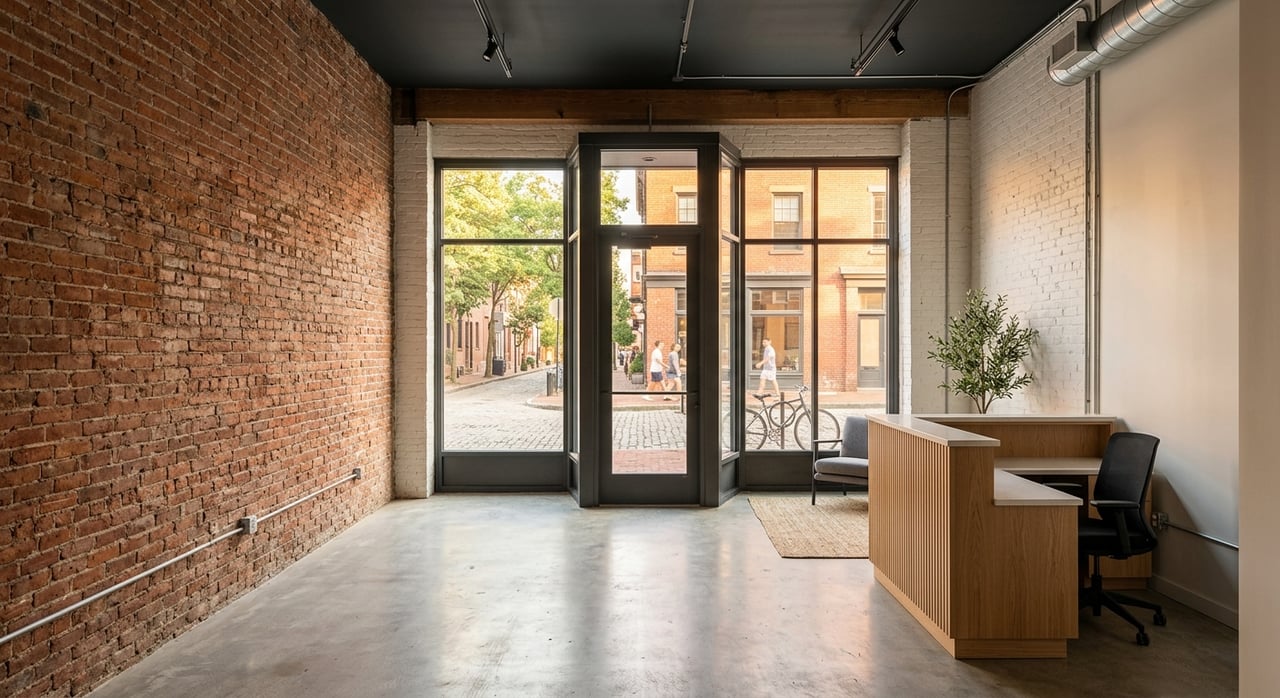
Leasing your first commercial space can feel exciting right up until the details start piling up. You may be comparing rents, picturing your layout, and trying to choose the right Indianapolis location, all while wondering what you might be missing. The good news is that a smart first lease usually comes down to a few key checkpoints: zoning, total cost, build-out timing, and lease terms. If you understand those pieces early, you can move forward with much more confidence. Let’s dive in.
Start With the Indianapolis Market
If you are leasing office space in Indianapolis, you are entering a different market than someone looking for retail space. In Q1 2026, Indianapolis office vacancy was 20.8%, with average asking rent at $21.83 per square foot. Downtown office vacancy was even higher at 24.2%.
That can create more room for negotiation on office leases. You may be able to ask for concessions, better fit-out terms, or more flexibility depending on the property and how long the space has been available.
Retail is a different story. Indianapolis retail vacancy was 4.8% in Q1 2026, with average asking rent at $17.97 per square foot NNN, and downtown retail vacancy stood at 8.7%.
For retail users, that tighter supply can mean less time to decide when a space truly fits your needs. If you find a location with the right visibility, access, and layout, you may need to act more quickly than an office tenant would.
Confirm Zoning Before You Compare Rent
One of the biggest first-lease mistakes is falling in love with a space before confirming that your business use fits the property. In Indianapolis, the Indy Zoning Browser is the city’s official property-specific zoning tool. It can help you verify what zoning applies at a specific address and whether your use is allowed.
The zoning details matter more than many first-time tenants expect. A use listed as permitted by right still has to meet other zoning standards, and the zoning district itself shapes what the property is intended to support.
For example, Indianapolis zoning examples show C-1 office-buffer districts are intended for office uses, while C-3 neighborhood commercial districts are intended for retail sales and personal, professional, and business services. That means the same square footage in two different buildings may not serve your business in the same way.
Why site fit matters too
A good lease is not just about whether the use is technically allowed. You also need a site that works for how you operate every day.
Ask practical questions like these:
- Is there enough parking for staff and customers?
- Is the frontage visible from the street?
- Can deliveries happen without disrupting traffic flow?
- Does the space have the customer access you need?
- Is there a workable location for signage?
These details can affect your day-to-day success just as much as rent. For many first-time tenants, site fit becomes clear only after they step back and think through how the business will actually function.
Ask Early About Exterior Changes and Signage
If you plan to change anything outside the space, bring that up before lease terms are finalized. In Indianapolis, exterior or site changes may trigger the Improvement Location Permit, or ILP, process.
The ILP process can require items like a scaled site plan, elevations, parking layout, landscaping, lighting, drainage, and sign details. Most signs also need an ILP unless they are specifically exempt.
That means your build-out may involve more than interior paint and fixtures. If you are counting on a monument sign, wall sign, parking lot updates, or site circulation changes, ask whether those items are already approved or whether new plans will be required.
Understand the Lease Type Before Comparing Quotes
A quoted rental rate does not tell the whole story. Before you compare one Indianapolis property to another, you need to understand what the lease structure includes.
JLL defines a gross full-service lease as one where the landlord pays all building expenses. A triple-net lease means you pay rent plus real estate taxes, expenses, and maintenance fees. A percentage lease, often used for larger retail stores, combines base rent with a share of gross sales above a set threshold.
Focus on total occupancy cost
This is where many first-time tenants get tripped up. A lower base rent can still lead to a higher monthly cost if taxes, operating expenses, insurance, utilities, or maintenance are added on top.
That is especially important in Indianapolis because the market data is quoted differently across property types. Office asking rent averaged $21.83 per square foot overall, while retail asking rent averaged $17.97 per square foot NNN.
Those numbers are not directly comparable unless you know exactly what is included. The better approach is to compare your full monthly and annual occupancy cost for each option.
Build-Out Can Shape Your Timeline
For many first leases, the biggest surprise is not rent. It is timing. Even a straightforward space can take longer than expected if improvements, permits, inspections, or approvals are needed.
Indiana building code says a permit is required when an owner intends to construct, alter, repair, or change the occupancy of a building or structure. The code also states that a building or structure may not be used or occupied until a certificate of occupancy has been issued.
In some cases, a temporary certificate of occupancy may be allowed before full completion if the portion being used can be occupied safely. Even so, you should build extra time into your schedule rather than assuming a quick move-in.
When design review may apply
Indiana also requires many projects to go through the state construction design release process. According to IDHS, Class 1 structures include buildings or structures used by the public, by three or more tenants, or by one or more employees of another.
That makes the design-release question an important early checkpoint for office and retail tenants, especially if customers will visit the space or if employees will work there regularly. If the answer is yes, your project timeline may need to account for another layer of review.
Plan for occupancy, not just construction
A space is not ready just because the contractor is nearly done. Your lease timeline should allow for:
- Design review if required
- Building permits
- Site-related approvals if needed
- Inspections
- Certificate of occupancy work
If you also need exterior changes, signage, parking updates, or drainage work, the process can become more involved. That is why move-in timing should be discussed at the start, not at the end.
What to Clarify Before You Sign
Your first lease should answer more than the rent question. Before you commit, make sure you understand the deal from both an operational and financial standpoint.
A practical Indianapolis first-lease checklist includes:
- Define how much square footage you need now and over the next 24 to 36 months
- Confirm your use is allowed at the address in the Indy Zoning Browser
- Ask what permits, drawings, and occupancy approvals are already in place
- Compare total occupancy cost, including taxes, operating expenses, utilities, insurance, signage, and build-out
- Clarify who pays for tenant improvements, code upgrades, demolition, and sign permitting
- Check parking, access, loading, and customer visibility
- Ask about renewal options, assignment and sublease rights, rent escalations, and restoration obligations
This checklist helps you move beyond the excitement of the tour and into the realities of operating from the space. It also helps you avoid surprises after the lease is signed.
Where Professional Guidance Adds Value
A first commercial lease has a lot of moving parts. You are not just picking a location. You are weighing zoning fit, cost structure, site function, approvals, and timing all at once.
That is where experienced guidance can make the process clearer. A broker can help you compare options, identify questions to ask before signing, and keep the focus on the full picture rather than just the asking rent.
For a first-time office or retail tenant in Indianapolis, that kind of support can save time and help you make a more informed decision. It is especially helpful when the lease, the build-out, and the property’s real-world usability all need to line up.
If you are weighing your first office or retail lease in Indianapolis, working with a calm, informed advisor can make the process feel far more manageable. Tiffany Fries brings a practical, relationship-first approach to more layered real estate decisions, including commercial leasing, and can help you think through the space, the terms, and the timing with clarity.
FAQs
What should you check before leasing office space in Indianapolis?
- You should confirm zoning at the specific address, compare total occupancy cost, review parking and access, and ask what permits or occupancy approvals may still be needed.
How is retail leasing different from office leasing in Indianapolis?
- Indianapolis retail space has a tighter market, with lower vacancy than office space, so retail tenants may have fewer options and may need to move faster when a suitable space becomes available.
What does NNN mean in an Indianapolis retail lease?
- NNN, or triple-net, generally means you pay base rent plus additional costs such as real estate taxes, operating expenses, and maintenance fees.
Do Indianapolis tenants need approval for signage or exterior changes?
- Yes, many exterior or site changes may require an Improvement Location Permit, and most signs need an ILP unless they are specifically exempt.
Can you move into an Indianapolis commercial space right after construction finishes?
- Not always. Indiana building code says a building or structure may not be used or occupied until a certificate of occupancy has been issued, though a temporary certificate of occupancy may be allowed in some cases.