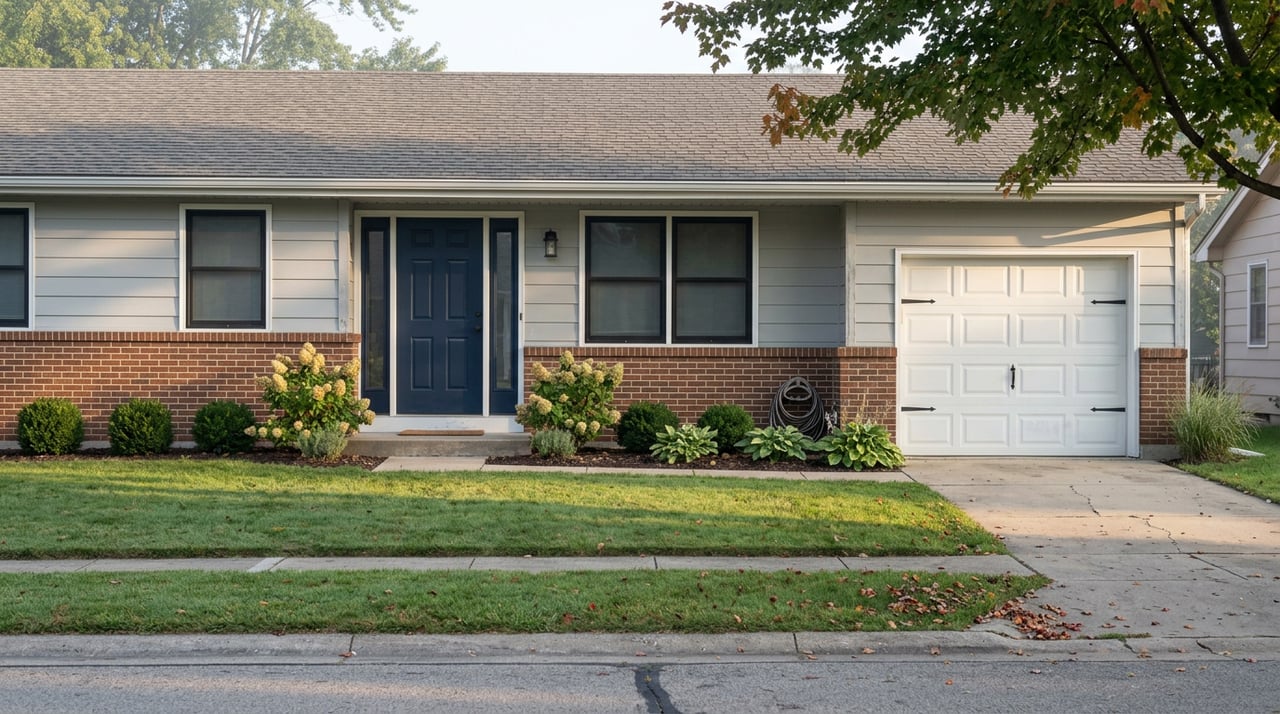
A Fort Wayne seller lists a three-bedroom in April. Two offers arrive in the first week. The home closes before the end of the month, and everything about the process feels effortless, right up until the closing statement lands on the table. Near the bottom, a line reads something like "property tax proration," and it subtracts more from the proceeds than the seller expected. The commission was budgeted for. The tax credit was not.
That surprise has nothing to do with how quickly the home sold. It comes from the way Indiana law and Allen County custom structure a residential closing, and those mechanics run on their own calendar, separate from days on market or number of offers.
The Speed Everyone Quotes Isn't the Whole Story
Fort Wayne's pace has been genuinely quick this year. Over the three months ending in May 2026, homes sold for a median of $225,000, up 2.2 percent from the same period a year earlier, and the typical listing went under contract in around 18 days, compared with 15 days the year before. Sellers averaged roughly two offers apiece, and the fastest-moving homes closed near 2 percent above list price and went pending in about three days.
A separate look at the same market, tracked through June 2026, told a less breezy story. Sale-to-list ratios were sitting right at 100 percent, months of supply were closer to 3.8, and roughly 22 percent of active listings had cut their asking price at least once. Both pictures are accurate. One tracks how quickly a home under contract moves to closing. The other tracks the full pool of listings, including the ones still sitting and still adjusting price.
Zillow's broader home-value index adds a third data point: the average Fort Wayne home value stood at $250,668 as of June 30, 2026, up 2.6 percent year over year, a slower climb than the median sale price alone would suggest.
None of that changes what leaves a seller's pocket at the closing table. Commission, title costs, and prorated taxes are calculated the same way whether a home sits for three days or ninety. The 18-day statistic describes marketing time. It says nothing about the deductions on the closing statement, and most of those were set before an offer ever came in.
The One Deduction That Moves With the Calendar, Not the Market
Indiana pays property taxes a year behind. The spring installment, covering the prior year, is due May 10, and the fall installment is due November 10. Whoever owns the home when a tax bill goes unpaid ends up owing it later, so at closing the seller credits the buyer for whatever has accrued since January 1 but has not yet been billed.
That credit is not a percentage of the sale price. It is a function of the date on the calendar. A seller who closes in February owes a credit for a month or two of accrued taxes. A seller who closes in November is crediting the buyer for nearly a full year's worth. Two homes that sell for identical prices in the same neighborhood can produce very different closing statements depending on nothing but which month the deal happens to close.
This is the deduction most sellers don't budget for, because it stays invisible until a title company runs the exact math, and it has no relationship to how fast the home found a buyer.
Paperwork That Doesn't Care How Fast You Sold
Every Indiana seller of a one-to-four-unit home completes the same statutory form regardless of market speed: the Seller's Residential Real Estate Sales Disclosure, known by its form number, 46234, required under Indiana Code 32-21-5. It covers the foundation, mechanical systems, the roof, structural defects, well and septic details, flood history, and known hazards including radon, mold, lead, and methamphetamine remediation.
Filing that disclosure carries a flat $20 fee at the county auditor's office, and recording the deed adds another $25 at the Allen County Recorder. Neither fee scales with sale price or with how many days the home spent on the market. A $150,000 starter home and a $600,000 executive listing both pay the same $45 in county paperwork.
Indiana does hand sellers a real advantage elsewhere. There is no state transfer tax on real estate sales, and the state does not require a real estate attorney to close. Owner's title insurance is customarily paid by the seller, which is worth planning for rather than negotiating away, since it is local custom rather than statute.
The Two Disclosure Lines Local Inspectors Flag First
Two items on that Form 46234 checklist tend to surface most often once an inspector walks through a Fort Wayne home.
The first is radon. Indiana carries elevated radon levels statewide, and many homes exceed the EPA's action level of 4 picocuries per liter. Most buyers test for it during the inspection period, and mitigation, when needed, typically runs $800 to $2,500.
The second is basement moisture, a recurring issue across Indiana's clay-heavy soil and flat terrain, Fort Wayne included. Any history of flooding, waterproofing work, or sump pump installation belongs on the disclosure form, and buyers tend to look closely at basements during inspection regardless of how competitive the offer process was.
Neither cost is created by a fast sale or avoided by one. Both are property-specific facts that get disclosed and, often, negotiated through repair credits rather than price cuts.
What Actually Leaves the Proceeds
| Line item | Typical range | Driven by |
|---|---|---|
| Agent commission | About 5.5% total (roughly 2.65% listing, 2.85% buyer's agent) | Negotiated rate, not market speed |
| Closing costs excluding commission | About 2.71% of sale price on average | County fees, title work, recording |
| County disclosure and recording fees | $20 plus $25 | Flat, regardless of price |
| Property tax proration credit | Varies by closing month | Calendar, not market pace |
| Radon mitigation, if needed | $800 to $2,500 | Property condition |
Different sources bundle these categories differently. Some estimates for a full Indiana sale land closer to 8 percent of the sale price once commission and closing costs are combined, while others describe a seller's total burden closer to 6 to 8 percent depending on how prorated taxes and concessions get counted. The spread is a reminder that any single "total cost to sell" figure depends on which line items are included, and a seller comparing quotes should ask exactly what is and is not counted before comparing percentages.
A Few Questions Worth Asking Before You List
Does Indiana require a real estate attorney to close? No. Closings run through a title or escrow company, and hiring an attorney is optional, typically adding $500 to $1,500 if a seller chooses that route.
Is there a state transfer tax in Fort Wayne? No. Indiana does not levy a state real estate transfer tax, which keeps overall closing costs lower than in many neighboring states.
Can I estimate my exact tax proration before I list? Not precisely, but a title company can calculate it once a closing date is set, since the figure depends on the specific closing date and the property's assessed tax rate for the year.
Timing the Calendar, Not Just the Market
A fast market is worth planning around, but it isn't the only calendar that matters in a Fort Wayne sale. The tax-arrears cycle, the flat county fees, and the statutory disclosure requirements move on their own schedule, and understanding that schedule before listing is what turns a closing statement from a surprise into something a seller expected all along.
If you're weighing a sale and want a clear read on what your specific numbers will look like, from the tax credit to the disclosure paperwork, Tiffany Fries and the team at Triad Real Estate Services can walk through your net sheet before you list. Schedule a Free Consultation to get the full picture before your closing date is set.