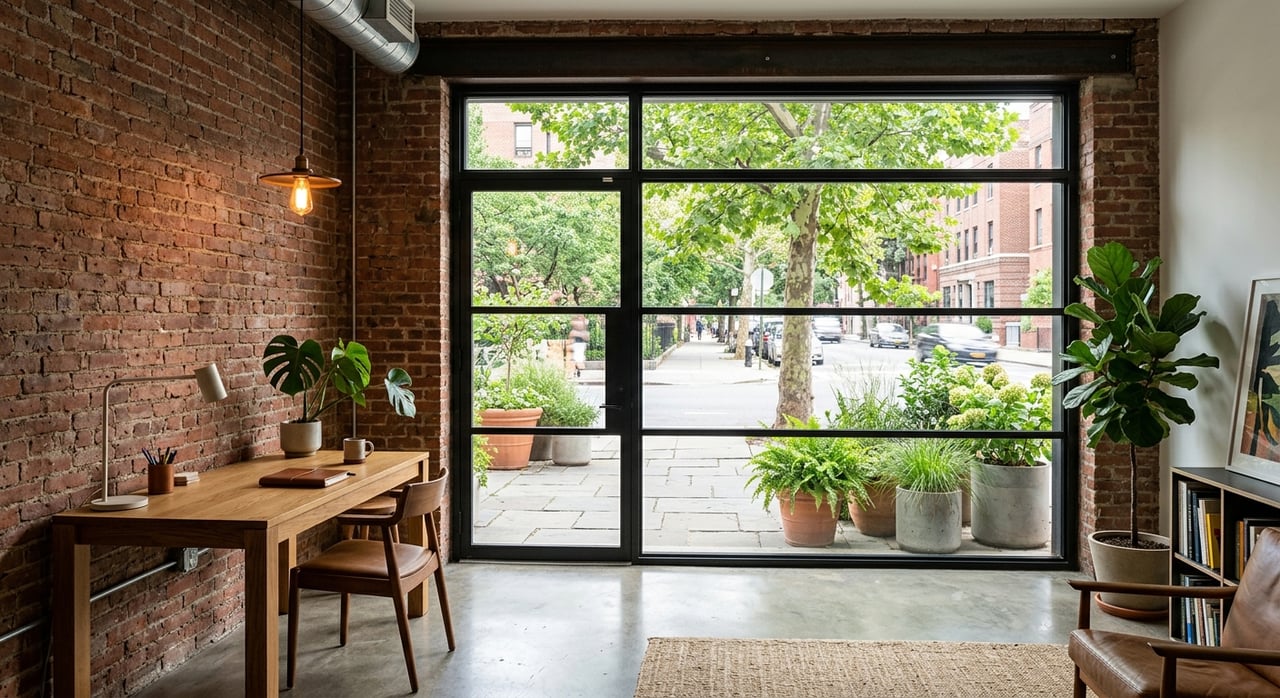
Looking for a home that can support both your daily life and your work in Indianapolis? You are not alone. For entrepreneurs, creatives, and remote professionals, the right property can offer flexibility, visibility, and a layout that fits more than a traditional house or condo. If you are searching for live-work style homes in Indianapolis, it helps to know where to look, what the city means by “live-work,” and how to verify a property before you make an offer. Let’s dive in.
What live-work means in Indianapolis
In Indianapolis, a live-work unit is more than a home office. City rules define it as an integrated living and working space with shared access, where the space is intended to function primarily as business workspace and the residential use is incidental.
That distinction matters when you start your search. A true live-work property is part of the city’s mixed-use framework, and the nonresidential use must be owned or operated by a resident and limited to uses permitted in that zoning district.
If you only need a quiet place to work from home, a standard residential property may still work. Indianapolis treats a home occupation differently, with the dwelling remaining your legal primary residence and the work area limited to 600 square feet or 30% of the unit.
The city also limits exterior business changes for home occupations. Separate exterior entrances and exterior alterations for the business are not allowed in that setup, which is why buyers who want stronger business visibility often focus on true live-work inventory instead.
Where to start your search
Indianapolis has several areas where live-work style homes make the most sense. In general, your best opportunities tend to be in mixed-use, walkable districts and city-planned corridors rather than purely residential subdivisions.
The strongest places to begin are downtown, Broad Ripple Village, Fountain Square, and Irvington. After that, it can make sense to expand your search into other planned corridors and neighborhoods, but only after parcel-level zoning is confirmed.
Downtown and near-downtown districts
Downtown is one of the strongest search zones for true live-work inventory. The city’s use tables allow live-work units in central business districts and mixed-use districts, which means you should not rule out properties simply because they appear partly commercial.
Within the Regional Center, areas like Mass Ave, Market East, and the Wholesale District are especially worth watching. These are places where urban design, active streets, and mixed-use building patterns align more naturally with live-work layouts.
The Indianapolis Cultural Trail also connects several of these downtown districts with nearby areas such as Fountain Square. For many buyers, that kind of connectivity adds practical value if you want easier access between home, clients, and daily errands.
Broad Ripple Village
Broad Ripple Village is another smart place to search. It is part of a city-planned area, and the village’s form-based zoning was shaped through the Envision Broad Ripple planning process.
From a practical standpoint, Broad Ripple offers the kind of built environment that often supports live-work style housing. It is connected by the Monon Trail and the Red Line, which can be useful if your day-to-day routine depends on mobility and neighborhood access.
If you want a property in an active district with a blend of residential and business uses nearby, Broad Ripple deserves a close look. It is often one of the first places buyers think of for flexible urban housing in Indianapolis.
Fountain Square
Fountain Square is one of Indianapolis’ oldest neighborhoods, and it remains a logical place to search for live-work opportunities. The district’s connection to the Cultural Trail and the Red Line supports the kind of active street environment that often pairs well with mixed-use housing.
For buyers, that usually means better odds of finding buildings with street-facing layouts, mixed-use character, and a form that feels different from a standard single-family home. If your goal is flexibility plus neighborhood energy, Fountain Square should be high on your list.
Irvington and other planned corridors
Irvington is also named in the Marion County Land Use Pattern Book as a mixed-use, walkable neighborhood that is good for business. That makes it a sensible place to check for live-work style housing, especially if you want an established neighborhood setting.
Beyond Irvington, the city’s planning GIS identifies other official sub-area plans that may be worth exploring. These include the 38th Street Corridor, Keystone Avenue Corridor, Meridian Kessler, Near North, Nearwestside, West Washington Street Corridor, Shelby Street Corridor, and the Regional Center.
The key is not to assume that every property in those areas will qualify. These are best treated as places for parcel-by-parcel review rather than broad promises about inventory.
Why zoning matters so much
When you search for a live-work style home, zoning is one of the first filters that matters. Indianapolis allows live-work units in mixed-use and central business district categories, and the city’s live/work building type standards are concentrated in MU-2, MU-3, and MU-4 districts.
These mixed-use districts are intended to create compact, walkable places with connected streets and human-scale buildings. That is one reason they are such important search zones for buyers who want a property that supports both residential and business use.
The building type itself is sized more like a small urban infill product. City standards describe lot areas from 1,500 to 6,000 square feet, widths from 18 to 50 feet, and a maximum height of 40 feet or three stories.
Those details can help you picture what inventory may look like in real life. Instead of a large suburban setup, many live-work properties in Indianapolis are more likely to resemble compact mixed-use buildings in walkable districts.
Property features to watch for
Not every flexible-looking property is actually a good live-work fit. In Indianapolis, site design and street relationship can offer useful clues before you dig deeper.
Look closely at features such as street-facing frontage, ground-floor visibility, alley access, and curb cut limitations. The city’s mixed-use rules place importance on transparent ground-floor treatment and often prefer alley access when possible.
Parking is another detail you do not want to overlook. Indianapolis does not treat live-work parcels as automatically parking-free, and vehicle access can still be an important part of the property’s usability.
If your business depends on customers, deliveries, or regular appointments, these physical details matter just as much as the interior layout. A beautiful space can still be a poor fit if access and site function do not line up with your day-to-day needs.
How to verify a live-work property
Before you make an offer, take time to confirm that the property truly supports your goals. In a category like live-work, assumptions can create expensive problems.
Start with the city’s zoning tools, including the Indy Zoning Browser, Property Report Cards, and MapIndy zoning data. These tools can help you review parcel-level information and spot basic zoning patterns.
Keep in mind that MapIndy notes its mapping is informational and not a legal document. If a property looks promising, the next step is to confirm the zoning district and whether live-work is permitted by right or requires additional review.
You should also compare the property’s form to the city’s mixed-use rules. Check details like frontage, alley access, curb cuts, and whether the building pattern aligns with the kind of live-work use you want.
If you only need a dedicated office and do not need customer-facing visibility, a home occupation in a standard residence may be enough. That can open up more housing options, but it also comes with limits on work area size and exterior changes.
A simple search strategy for buyers
If you want to search efficiently, it helps to narrow your priorities before touring properties. Live-work buyers often save time by separating “must-have” business needs from “nice-to-have” lifestyle features.
A practical starting checklist may include:
- Whether you need a true live-work unit or only a home office
- Whether client visibility matters
- How important trail or transit access is to your routine
- Whether parking or delivery access is essential
- Whether you prefer downtown, village-style, or neighborhood-based surroundings
- Whether the property’s zoning is already confirmed
Transit and trail access can be a helpful filter in Indianapolis. The Red Line links Broad Ripple and downtown, the Monon Trail connects Broad Ripple to downtown, and the Cultural Trail links downtown districts with places like Mass Ave and Fountain Square.
For many buyers, that means you can focus first on areas where the physical layout, zoning context, and day-to-day convenience already point in the right direction. That usually leads to a smarter search and fewer dead ends.
If you are exploring live-work style homes in Indianapolis, the most effective path is to start in the city’s strongest mixed-use districts, verify zoning early, and match each property to the way you actually plan to live and work. If you want experienced guidance on flexible, mixed-use, and neighborhood-driven real estate decisions, Tiffany Fries can help you evaluate your options with clarity and care.
FAQs
What is a live-work unit in Indianapolis?
- In Indianapolis, a live-work unit is an integrated living and working space intended primarily for business workspace, with residential use considered incidental.
Where should you look for live-work style homes in Indianapolis?
- Strong starting points include downtown, Mass Ave, Market East, the Wholesale District, Broad Ripple Village, Fountain Square, and Irvington, with other planned corridors worth checking after zoning review.
Can you run a business from a regular home in Indianapolis?
- Yes, in some cases a home occupation may work, but the property must remain your legal primary residence and the work area is limited to 600 square feet or 30% of the unit, with restrictions on exterior changes.
Which zoning districts matter for live-work homes in Indianapolis?
- Live-work units appear in mixed-use and central business district use tables, and the city’s live/work building type standards are concentrated in MU-2, MU-3, and MU-4 districts.
How do you verify whether an Indianapolis property allows live-work use?
- Review the parcel through the Indy Zoning Browser, Property Report Cards, and MapIndy, then confirm the zoning district and allowed use through the city code and city staff if needed.
Why are Broad Ripple and Fountain Square popular for live-work searches in Indianapolis?
- Both areas combine mixed-use character with strong connectivity, including access to the Red Line, the Monon Trail, or the Cultural Trail, which can support a more flexible live-work lifestyle.